The growing popularity of remote work has changed how companies work. It gives them access to the global talent pool, making it easier to keep up with the need for a diverse workforce as their business expands to different regions. However hiring international remote workers is not easy, it needs careful consideration of the legal aspects of remote work.
International remote hiring compliance may expose the company to severe penalties, reputational issues, and operational challenges. If you are an employer looking for the best remote workers without suffering the challenges of hiring global remote workers, you are in the right place.
Read below to find out how to handle the legal aspects of remote work and make sure you meet compliance while fully benefiting from working remotely.
International Remote Hiring Compliance You Should Know
Remote work gives businesses access to talented workers across international borders, requiring businesses to abide by local and international employment laws. Therefore, ensuring legal requirements for remote workers is integral to developing a safe working relationship with international employees.
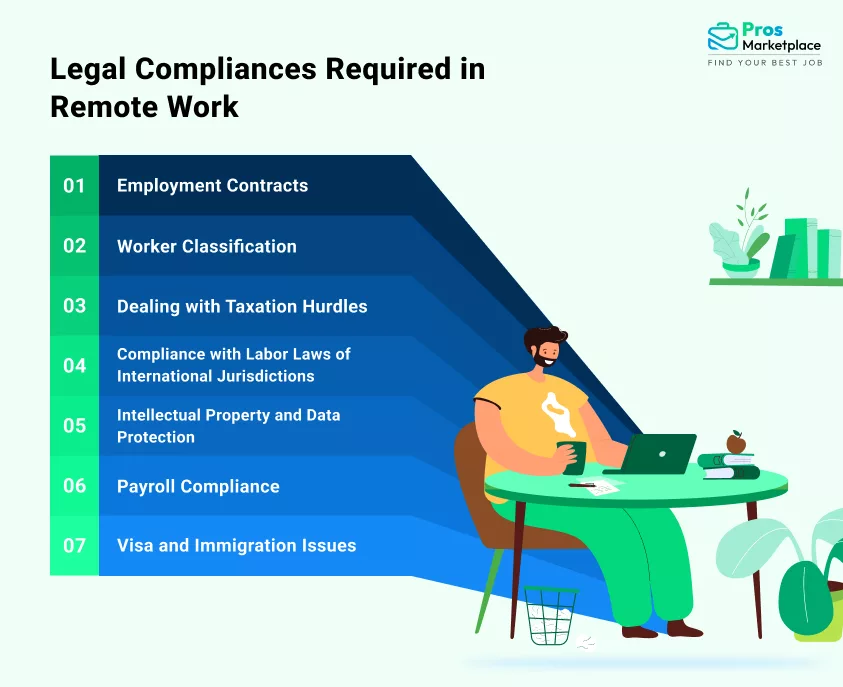
Failure to follow the legal aspects of remote work might trigger disputes and liabilities and destroy trust. Here’s a checklist that will make international remote hiring compliance easier for you:
Employment Contracts
Preparing contracts for international remote workers requires more than a standard employment agreement. If the terms are not defined per local laws, the company will likely be in a dispute or face a penalty for noncompliance.
So when planning to expand your business across international borders, here are a few things you must add to your employment contracts:
- The local labor laws in the worker’s country include minimum wage requirements, statutory benefits, and termination rules.
- Intellectual property protection to secure company assets.
- Tax responsibilities and provisions for compliance with dual taxation treaties.
Worker Classification
The most common mistake employers make is misclassifying workers as independent contractors instead of employees.
Therefore, understanding the subtleties of global remote worker regulations is important for achieving this classification. However, several countries have special definitions and tests to determine when a worker should be classified as an independent contractor rather than an employee.
Further, make sure you do all the research about your target countries for hiring to avoid international remote hiring compliance issues.
Misclassification is considered a serious error in some countries, which can lead to:
- Fines and back-pay liabilities for benefits.
- Legal scrutiny from labor authorities.
Dealing with Taxation Hurdles
Taxes are one of the most difficult legal aspects of remote work in hiring internationally. The tax obligations of both – one’s home and host country have to be respected by the employer and the employee. Businesses failing to understand and control international tax obligations can face penalties, reputational risks, and financial loss. So always be careful about:
Employer Tax Requirements:
- An employer may have tax responsibilities that include:
- Obtaining a tax ID number in the country where the employee works.
- Paying income tax for the worker.
- Making an employer’s contribution to social security and similar programs based on the applicable domestic laws.
Worker Tax Compliance
International employees experience double taxation; that is, their income will be taxed both in their home country and the host country. Where a country has a bilateral tax treaty, the process is easy. However, an employee without knowledge may break the tax law unintentionally.
So here are a few things you must know to avoid double taxation:
- Investigate if a tax treaty exists between the two countries
- Documentation such as residence certificates for tax purposes
- Global payroll providers or legal experts in international taxation
Compliance with Labor Laws of International Jurisdictions
Labor legislation varies from one country to another, whether it is wages or working conditions. An employer has to follow these laws so that it does not violate the compliance law. Lack of understanding of these laws can lead to lawsuits, fines, and operational setbacks. So when hiring internationally, be careful about the following legal aspects of remote work to avoid international remote hiring compliance disputes:
Social Security Contributions
Most countries require employers to contribute to social security funds on behalf of their employees. These contributions vary widely, from healthcare to retirement savings. Knowledge of local mandates avoids surprise liabilities.
Intellectual Property and Data Protection
In today’s digital world, IP and data protection are the biggest concerns for companies hiring international remote workers. Protecting company information and ensuring that it is safe and compliant with global remote worker regulations is essential for competitive advantage and gaining trust.
Intellectual Property Agreements
Employers must have strong IP clauses in their contracts to:
- Ensure work created by employees is owned by the company.
- Safeguarding proprietary information against unauthorized use or distribution is nonnegotiable.
However, the legal protections for IPs vary from country to country. So the agreement must be valid in the employee’s country of domicile.
Data Protection and Privacy
Data protection regulations apply when employing a global workforce. For example, the General Data Protection Regulation in the EU has stringent rules on the processing and storage of personal data.
- Brazil and South Korea, among other countries, have a comprehensive data protection regulation.
- Employers need safe data practices and train remote workers on how these fit into compliance.
Payroll Compliance
International remote workers should be paid in a timely and accurate manner while being compliant with local laws. Payroll compliance will ensure that your workers are satisfied, minimize legal risks, and maintain your reputation. Without proper systems in place, payroll can become a logistical nightmare.
- Workers receive their salaries in their local currency, accounting for exchange rates.
- Taxes, benefits, and deductions comply with local laws.
- Payment processing is secure and transparent.
Most businesses outsource EOR services to maintain compliance. These services include handling payroll, tax filing, and legal compliance.
Visa and Immigration Issues
Visa and immigration laws influence remote work arrangements. Remote workers may not always need to relocate, but sometimes, legal formalities must be completed. Employers must take care not to get into trouble with either country’s authorities.
Although remote workers often do not need work visas to complete their jobs while working from a home country, employers should verify that the status of their worker’s immigration does not conflict with local legislation. Misunderstanding can lead to deportations and fines. Such examples include:
- Some countries allow only local workers in certain professions and industries.
- Others require permits to accomplish remote arrangements.
Businesses ensure that operations are not interrupted by taking proactive measures towards immigration laws.
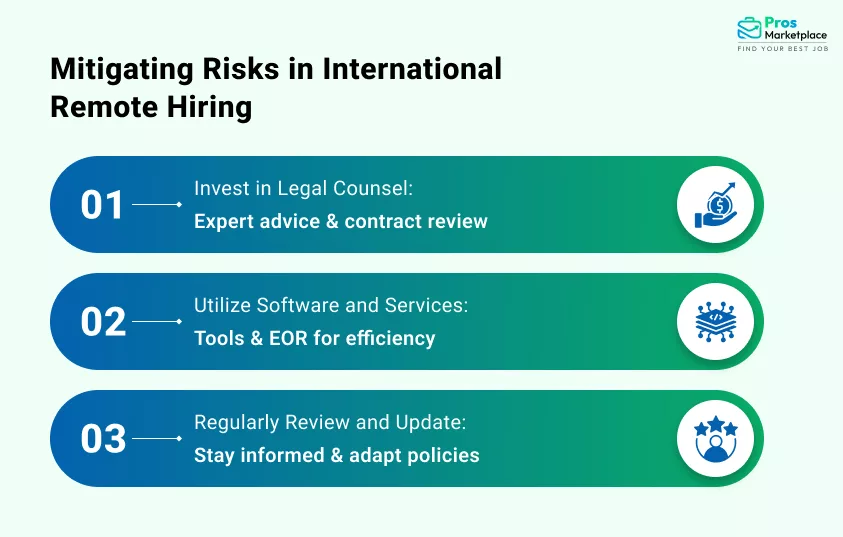
Handling Legal Aspects Of Remote Work- Risk Management And Liability Mitigation
Every international remote worker can be a risk element for your business when it comes to international remote hiring compliance. From potential compliance violations to contractual disputes, such risks have huge implications through financial and operational outcomes. A proactive system of risk management offers more fluid operations and greater resilience.
The risks of hiring foreign remote workers depend on the actual liabilities your business may incur. These include fines for breaches in employment laws; failure to fulfill tax or labor obligations; disputes with workers relating to contracts; and many others. To help mitigate the risks of legal aspects of remote work, you should:
- Invest in the best legal counsel available.
- Take advantage of available software tools and services.
- Regular updating of contracts and policies in line with changing laws.
Benefits and Insurance for International Remote Workers
Benefits and insurance for international remote workers serve a purpose greater than legal compliance; they boost loyalty and improve retention. Competitive benefits and in line with local expectations make your workforce feel valued and supported.
Although it is not mandatory to offer healthcare insurance, pension plans, or paid vacation in most countries, these benefits could enhance employees’ satisfaction and retention. Business enterprises should:
- Study standard benefits available in the worker’s country.
- Seek international benefit vendors to assist with the process.
- Have cross-border risk travel liability and other forms of cyber-liability insurance.
Key Takeaways on International Remote Hiring Compliance
- Understand Local Laws: Labor, Taxation and Benefits
- Secure Contracts: Draw contracts that comply with the rules in both jurisdictions
- Tax Compliance: Partner with professionals managing tax complexity.
- IP and Data Protection: ensure that agreements will be enforceable and comply with global data protection standards.
- Tech and Experts: Invest in tools or services that will facilitate compliance.
Conclusion
International remote hiring gives you access to a wider range of talent. This adds more innovation and diversity to your team. Although legal aspects of remote work can be challenging. These risks can be managed by following the global rules for remote workers. This helps you stay compliant with international remote hiring.
Investing time into such considerations will protect your organization from international remote hiring compliance issues. Moreover, it also encourages a productive, and acceptable relationship with the international remote workforce. So, if you are also planning to hire international remote workers but are worried about their reliability, register at Pros Marketplace. All the worker’s profiles are vetted and 100% reliable!