
Nearly every aspect of life switched to an online format since the start of the COVID-19 pandemic in 2020. The pandemic has drastically shifted how most companies operate, with many adopting the new remote work or hybrid work office model and now witnessing the advantages of remote work. Given the fact that remote work was labelled a passing fad during the pandemic, most people can now agree that the remote work model is the new normal.
According to a recent study in the US companies, remote working has now become a ‘practice widely and deeply embedded. This is good news for people interested in the tech industry or considering a career change, as the market is booming with opportunities. However, what are the primary benefits of remote work for companies and their employees?
This post aims to outline the following points to help the reader understand the ideal remote work model.
Understanding Remote Work for Companies: Advantages, Challenges & Tips
Remote work—also known as telecommuting, work-from-home (WFH), or location-independent work—is a professional arrangement where employees perform their job duties outside of a traditional office environment. This could be from home, coworking hubs, cafés, or anywhere with a stable internet connection and the necessary tools.
Key aspects of remote work include:
- Location Independence: Work from any environment that supports focus and productivity.
- Digital Collaboration: Leverage cloud software, video conferencing, and asynchronous communication to work efficiently.
- Flexible Hours: Align work schedules with natural productivity peaks.
- Results-Driven Culture: Measure success by outcomes, not desk time.
- Better Work Life Balance: Empower employees to integrate professional and personal lives more harmoniously.
Understanding remote work’s core meaning sets the stage for appreciating its organizational benefits—especially in cost savings, productivity, talent retention, and sustainability.
6 Key Advantages of Remote Work for Companies: An Overview
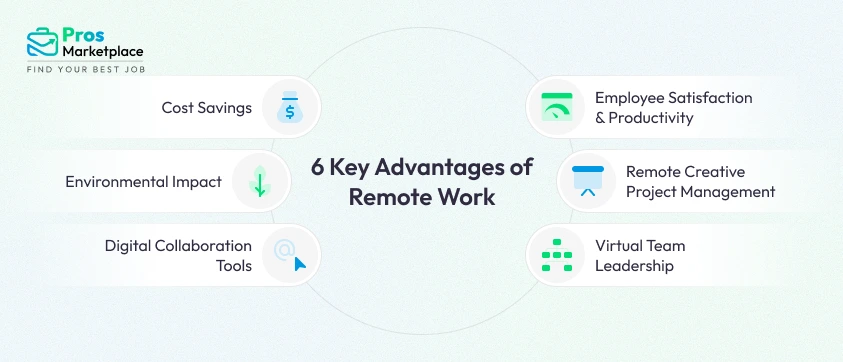
In 2025, remote working has matured into a high-value business strategy—one that goes beyond flexibility to deliver real organizational impact. Here’s an at-a-glance view of six advantages that are transforming how forward-thinking companies operate and grow:
1. Cost Savings
Remote work eliminates or significantly reduces expenses tied to physical office space—rent, utilities, cleaning, furniture, snacks, and commuter subsidies. By operating with leaner infrastructure, companies free up capital to reinvest in innovation, employee benefits, or market expansion. Even hybrid work setups can save millions annually, all while improving operational agility.
2. Employee Satisfaction & Productivity
Both morale and output are improved when teams have the freedom to structure their days around personal peak performance— this ultimately improved employee satisfaction. Remote employees get job satisfaction, enjoy better work-life balance, less burnout, and reduced commuting stress, while companies benefit from sharper focus, faster delivery times, and a culture anchored in trust and autonomy.
3. Environmental Impact
Cutting commutes and reducing energy-hungry office footprints directly lowers greenhouse gas emissions. Remote work supports corporate ESG goals, appeals to eco-conscious customers, and strengthens brand reputation as a sustainability leader—meeting both environmental and social responsibility targets.
4. Remote Creative Project Management
Managing creative projects remotely enables companies to tap talent from diverse locations, bringing fresh perspectives into design, marketing, and innovation. Cloud-based project tools allow for real-time updates, agile revisions, and transparent workflows—keeping creative momentum alive without physical brainstorming rooms.
5. Digital Collaboration Tools
Advanced collaboration platforms like Slack, Miro, Figma, Trello, and Asana have turned distance into a non-issue. They streamline communication, centralize assets, and make teamwork seamless—whether teams are 10 miles apart or 10 time zones away. This digital backbone keeps ideas flowing and projects on track.
6. Virtual Team Leadership
Leading teams in a virtual environment demands new skills—clear communication, empathy, and results-focused management. Remote work empowers managers to build stronger, more inclusive cultures by focusing on output over presence, offering flexible support, and nurturing trust across distributed teams.
5 Most Common Challenges In Remote Work and Tips To Face Them
While remote work and hybrid work offer tremendous advantages, they also bring unique challenges that companies must address to sustain success. Understanding these obstacles helps leaders create supportive, resilient teams that thrive beyond physical offices.
1. Communication Gaps
In a remote setup, the lack of in-person interaction can make it harder to pick up on tone, body language, or quick clarifications. This increases the risk of misinterpretations or missed details, especially when relying heavily on written messages. Without deliberate communication habits, important updates can slip through the cracks, slowing down decisions and affecting project flow.
Tip: Foster clear, consistent communication protocols by using a mix of synchronous (e.g., video calls) and asynchronous (e.g., project boards) tools suited to different needs.
2. Collaboration and Creativity Barriers
In traditional offices, quick desk chats or spontaneous whiteboard brainstorms often lead to innovative solutions. In a virtual environment, replicating that natural creative rhythm is challenging, as collaboration tends to be more structured and scheduled. Without intentional spaces for free-flowing ideas, teams risk losing that spark of innovation.
Tip: Encourage regular virtual brainstorming sessions using collaborative software to replicate the creative energy of in-person meetings.
3. Isolation and Engagement
Remote working can leave employees feeling distant—not just physically, but also from the company’s culture and social dynamics. Missing out on casual conversations and shared in-office moments can reduce a sense of belonging. Over time, without social touchpoints, this can lead to disengagement and even burnout.
Tip: Build social connections through virtual coffee breaks, team games, and recognition programs to sustain employee engagement and camaraderie.
4. Time Zone Differences
For global teams, time zone gaps often make it difficult to coordinate meetings, get quick responses, or maintain a steady workflow. Critical project phases may be slowed when one team is signing off just as another is starting their day. Without careful planning, these misalignments can lead to friction and delays.
Tip: Implement flexible scheduling and core hours where most teammates overlap, while promoting asynchronous workflows to accommodate different time zones.
5. Technology Dependency and Security Risks
Remote work relies entirely on digital tools, internet connectivity, and secure systems. If an employee experiences a tech failure or poor connectivity, progress grinds to a halt. On top of that, remote access can create vulnerabilities—without proper security protocols, sensitive data and systems can be exposed to cyber threats.
Tip: Invest in robust technology infrastructure and security training, ensuring everyone has the right tools and awareness to stay productive and protected.
HR & Culture: Building Connection in a Distributed World
In today’s distributed work environments, HR and culture play a pivotal role in bridging the physical gap between employees and fostering a sense of belonging and purpose. Building a strong remote work culture requires intentional efforts to maintain open communication, celebrate achievements, and cultivate trust across digital channels.
According to a Gallup study, companies with highly engaged remote workers experience 21% higher profitability and 41% lower absenteeism, underscoring the impact of a connected workforce on business success. By implementing clear remote workforce policies, encouraging virtual social interactions, and providing accessible support resources, organizations can sustain employee morale and create a vibrant, inclusive culture that transcends location, ultimately fueling innovation and long-term retention.
1. Remote Work Policy: The Guiding Framework
A transparent and flexible remote workforce policy acts as a compass for employees and managers, promoting clarity and fairness. Policies covering flexible hours, communication standards, and performance expectations cultivate trust and empower employees to balance work and life healthily.
2. Boosting Employee Morale
Remote workers flexibility helps reduce burnout, enhance wellbeing, and increase job satisfaction. Celebrating achievements virtually, encouraging social check-ins, and recognizing contributions are few employee benefits that contribute to a vibrant, connected culture despite physical distance.
3. Attracting Job Seekers & Expanding Talent Pools
Offering remote worker roles has become a top draw for job seekers worldwide. Many talented professionals prioritize remote opportunities when considering employers, allowing companies to tap into diverse, global talent previously out of reach.
4. Flexible Work Hours: Redefining Productivity
Remote work unlocks new ways to organize time—offering asynchronous schedules or core hours tailored to individual productivity cycles. This flexibility supports deeper focus, reduces stress, and encourages sustained high performance.
5. Reducing the Toll of Daily Commutes
Skipping daily commutes saves employees countless hours and money, leading to better mental health and greater job satisfaction. For companies, this equates to more energized, engaged teams ready to tackle challenges.
6. Lowering Employee Turnover
Remote worker flexibility strengthens employee retention by aligning work arrangements with personal needs, contributing to loyalty and reducing costly turnover. Studies show companies with remote-friendly policies experience up to 50% lower attrition.
How Remote Work Drives ROI for Leadership?
For visionary leaders, remote work is more than a mere operational choice—it’s a strategic lever that accelerates business returns on investment (ROI) in measurable and unexpected ways. By embracing distributed teams, companies dramatically lower overhead costs, expand revenue potential through access to global talent, and reallocate resources toward growth-focused initiatives. Let’s discuss these factors in detail:
1. Transforming Cost Structures
For leaders, remote work isn’t just about saving on office overhead—it’s a strategic reimagining of how resources are invested. By reducing real estate, utilities, and commuting costs, organizations unlock funds that can be reinvested in innovation, team development, and technology. Leaders can redirect savings into critical growth areas that drive long-term scalability and competitive advantage.
2. Leveraging Global Talent
Going remote dramatically expands a company’s talent pool. Leaders can attract skilled professionals from diverse geographies, increasing the organization’s capacity to tackle new markets and innovative projects. Accessing global expertise translates to higher-quality deliverables, faster problem-solving, and improved outcomes—all key drivers of organizational ROI.
3. Building Agility & Data Driven Decision Making
Remote work introduces robust analytics, providing leadership with real-time insights into increased productivity, employee engagement, and workflows. These metrics empower leaders to make agile, evidence-based decisions—transforming how companies respond to changing market demands. According to Stanford, remote companies see a 13% performance boost and 50% less employee turnover, resulting in financial continuity and organizational stability.
4. Strengthening Leadership Impact
For forward-looking executives, remote work creates an engine for sustainable growth. It’s no longer just about reducing costs; it’s about deploying resources strategically to maximize impact, nurture top talent, and future-proof the enterprise.
5 Steps to Implement Remote Work Strategically
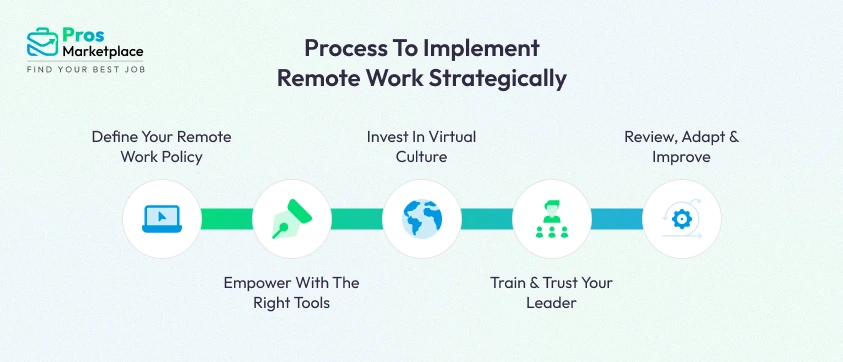
Implementing remote work isn’t as simple as sending employees home with laptops— it’s a strategic transformation requiring intentional planning and continuous improvement. A successful transition starts with a clear, inclusive policy that addresses expectations, communication, and digital security. When leaders focus on outcomes rather than hours and adapt processes based on regular feedback, remote work becomes more than a benefit—it evolves into a permanent engine for resilience, innovation, and competitive growth.
1. Define Your Remote Work Policy
Start with a clear, people-first remote employees work policy that lays out expectations, eligibility, and communication norms. Address time zones, core hours, meeting etiquette, and technology standards—so every remote employee knows what great work looks like, no matter where they log in.
2. Empower With The Right Tools
Equip your teams with secure, easy-to-use digital tools for collaboration, communication, and project management. Select platforms that support async feedback, brainstorming, and secure file sharing—think Slack, Zoom, Miro, Figma, Asana, or whatever fits your workflow best.
3. Invest In Virtual Culture
Remote culture doesn’t happen by accident. Foster virtual team-building, celebrate wins frequently, and encourage spontaneous “watercooler” chats. Schedule regular check-ins and open forums so every remote worker feels heard and connected, not just managed.
4. Train & Trust Your Leader
Great virtual team leadership is learned. Train managers to set clear goals, measure outcomes, and support remote employees with empathy and transparency. Shift the focus from hours worked to results delivered—empowering teams to own their outcomes.
5. Review, Adapt & Improve
Gather feedback early and often from your remote employees. Use analytics and employee input to refine processes, address pain points, and reinforce a growth mindset. Remote work isn’t one-size-fits-all: What works today can get better tomorrow if you keep listening and learning.
Top Digital Collaboration Tools For Remote Work In 2025
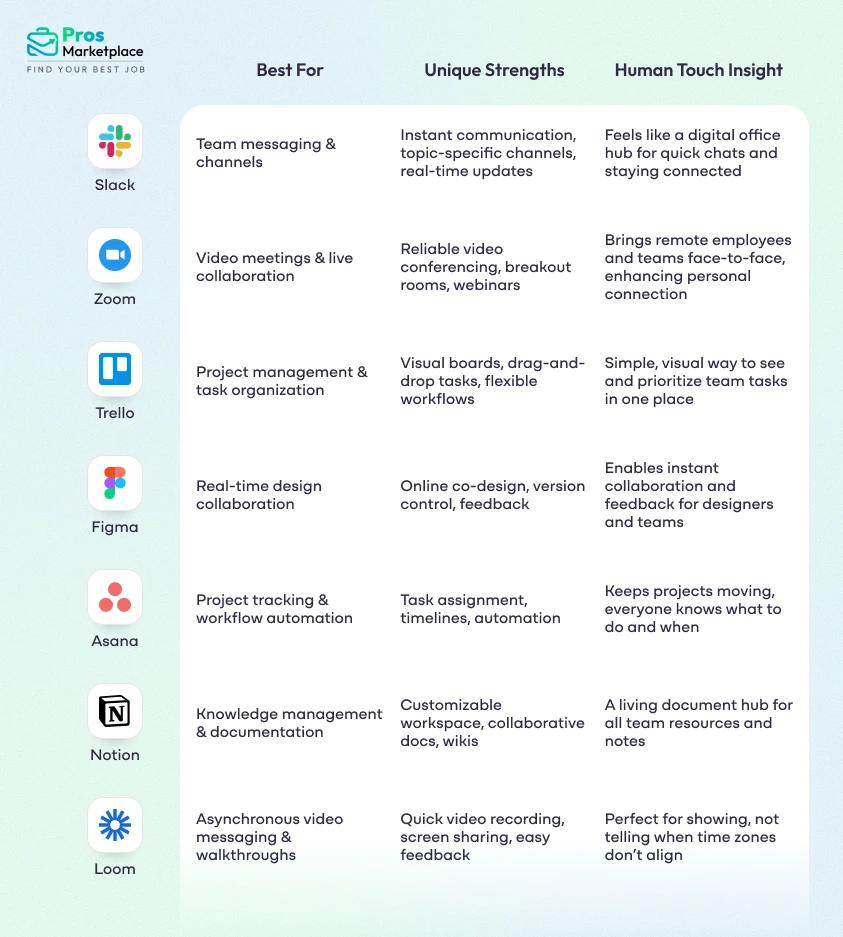
While remote work opens incredible possibilities, its success hinges greatly on the tools that bridge distance and time. Different collaboration platforms serve distinct roles, and knowing which tool fits which purpose ensures smooth communication and creativity.
Slack
Slack shines for instant messaging and team conversations, acting like a vibrant, virtual office hallway where quick questions and updates flow naturally.
Zoom
Zoom stands out for live video meetings, webinars, and face-to-face interactions—critical for preserving human connection in remote worker settings.
Trello
For visual project management and task organization, Trello provides an intuitive, card-based platform where teams can track progress, prioritize work, and collaborate through flexible boards that adapt to any workflow.
Figma
Figma revolutionizes design collaboration by allowing remote teams to co-create, review, and iterate on graphics and products instantly, breaking down traditional barriers between designers and stakeholders.
Asana
Keeping projects on track and tasks transparent is where Asana excels, offering clear timelines, responsibilities, and automation that streamline workflow management.
Notion
When it comes to organizing knowledge and documentation, Notion operates as a flexible, living hub for remote team learning, project notes, and policy guides.
Loom
Lastly, Loom allows asynchronous video messages—perfect for personalized walkthroughs and feedback that respect varied time zones and work schedules.
Conclusion
Remote work isn’t just a perk—it’s a catalyst for organizational excellence. From tangible cost savings to environmental good, increased productivity, and lasting talent retention, forward-thinking businesses are seeing transformative results.
Ready to create a future-ready, resilient, and impactful organization? The remote revolution is waiting—seize the advantages and thrive.