The transition to remote work has modified not only how businesses function, but also how they impact the planet. In addition to providing flexibility and increased productivity, remote work has also been shown to have pros that are very important at the moment, for the environment. With daily commutes and the need for office space cut back, companies are realizing that remote work and sustainability go hand in hand.
According to Circular Ecology, “The typical office energy consumption contributes relatively little to the overall carbon footprint”. The average is 33.43 kg CO2e a week, only about 4% of the total carbon footprint for an office. Office working emissions are about 3.5 kg CO2e a day per person in comparison, indicating the environmental upside of remote work.
But at the same time, while remote setups may help reduce carbon emissions and encourage eco-friendly practices, they also pose unique challenges, especially in the space of remote creative project management, where collaboration and creativity are essential.
In this post, we dive into the environmental impact of remote work, the ways in which it’s conducive to sustainability, and how to run creative projects efficiently in a distributed work environment. By the time we’re done, you’ll understand how remote work is good for employees, good for companies, and good for the planet. Let’s get started:
Environmental Benefits Of Remote Work
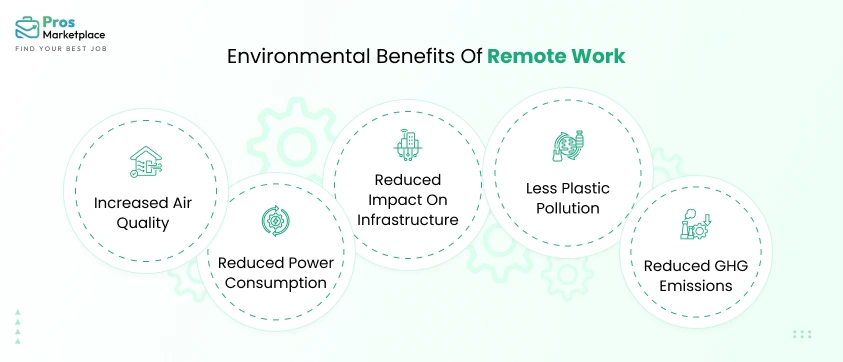
The trend toward remote work and hybrid work models is more than just a cultural or business phenomenon — it affects our environment. With little or no commute time, less energy usage, and fewer greenhouse gas emissions, remote and hybrid workers directly positively impact air quality, infrastructure wear and tear, and workplace sustainability. At a greater distance, this globalization of labor could become an important driver in fighting climate change and curbing the planet’s carbon footprint. Some of the most impactful remote work benefits on the environment include:
- Increased Air Quality
The improvement in air quality is one of the most outstanding environmental effects of remote work. With much of the workforce shifting to a work-from-home model temporarily, industrial activity slowed and commuting was dramatically reduced, resulting in a visible decline in air pollution in cities across the globe. Plus, as digital tools and remote creative project management practices proliferate, companies and employees alike are finding paper to be much less of a necessity (so you can bet we’re saving trees, too). Even 1 remote worker can stop around 14.7 pounds of C02 from entering the atmosphere each year by operating this eco-friendly product.With reduced greenhouse gas emissions, remote work, and sustainability are also directly translated into cleaner air, and many people have cited their communities looking and feeling cleaner. These can be life-changing (and they aren’t just statistics, here are the heartwarming stories), but they’re also a part of everyday living, proving that adopting a remote work lifestyle can change the world (and people’s lives) for the better.
- Reduced Power Consumption
A second major remote working environmental impact is how it saves energy. Although home workspaces take up half the amount of power that offices do, traditional office spaces use almost twice as much electricity. Offices, for example, need energy-intensive systems to keep the local climate as it should be, such as:
-
- Heating and cooling of large buildings
- Several computers and field servers are continuously active
- Multiple use of printers, photocopiers, etc.
These are demands that employees working from home largely don’t have to fulfill. In addition to infrastructure, the actions of employees also matter; people are simply more consistent about turning off lights, computers, and appliances at home than in the office. There are tangible sustainability benefits of remote work for the environment and sustainability programs, according to research findings, which indicate that a worker going remote saves about 5,400 kWh of energy each year.
“Cutting down on energy usage can reduce an organisation’s carbon footprint and align working from home and sustainable working with long-term environmental objectives.”
- Reduced Impact On Infrastructure
One frequently-ignored environmental impact of working remotely is the relief on urban infrastructure. Big metropolises often fail to keep up with the demand for transport on their public and road systems, particularly during rush hour. In the age of remote work, overcrowded streets and transit systems frequently lead to too much traffic and greater greenhouse gas emissions.
Since many more people are working from home, traffic has plummeted, cutting congestion far and leaving city centers conspicuously emptier in some places. In trimming the daily commutes of its population, remote work and sustainability help slash emissions from vehicles and make public transportation all the more efficient to serve its population. This fundamentally speaks to the fact that the benefits of remote work is not just about personal environmental wins, but also about smarter, more sustainable cities.
- Less Plastic Pollution
Another interesting environmental effect of remote work is a reduction in plastic waste. It’s hard to quantify exact numbers, but remote work does help companies and their employees cut back on single-use plastics. Small changes, such as eliminating plastic cups, straws, and disposable cutlery around the office, say, can make a big difference. Research also shows that employees are more conscious of plastic use at home than they are at work.
By taking on these small but potent habits, businesses can work to ensure their remote work and sustainability initiatives contribute to overall environmental goals. This demonstrates that there are benefits of working from home aside from those related to energy and emissions, and the result is a more environmentally friendly day, from both a personal and business perspective.
- Reduced GHG Emissions
One of the most immediate environmental effects of remote work is in greenhouse gas reduction (GHG). Remote workers reduce emissions from personal vehicles and public transit (including trains and buses) by not commuting daily.
If such workers with telecommute-compatible jobs spent half of their time telecommuting, GHG emissions would drop by 54 million tons, according to Global Workplace Analytics. Breathe London also found that, in the first days since home working came into effect, morning commuter emissions fell by 25% and those for evening commutes dropped by 34%, showing the real difference that reduced travel can make to the environment.
These statistics illustrate the close connection between remote work and sustainability, demonstrating that embracing remote or hybrid work setups can help deliver a positive effect that can be measured.
How Can A Business Integrate Remote Work Efficiently
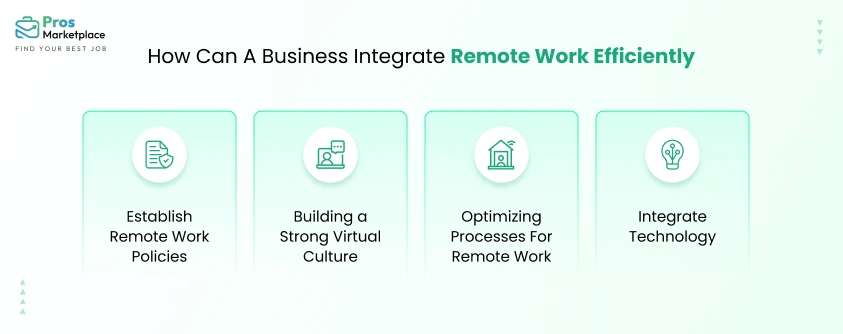
With more organizations moving toward remote and hybrid work environments, it’s critical to implement strategies that balance productivity with sustainability initiatives. Telecommuters can be instrumental in reducing a company’s overall carbon footprint by reducing the greenhouse gas emissions associated with employee commutes and by improving air quality, but only if businesses implement their systems carefully. So going forward, the companies that are able to optimize processes, use technology, and foster a strong virtual culture will see gains not only in efficiency but in trackable environmental impacts.
1. Establish Remote Work Policies
For successful remote creative project management and for organizations to get the most out of remote work, there must be clear policies regarding how remote and in-office work should intersect. Thoughtfully designing in-person interactions, informed by factors like team dynamics, types of projects, and the location of employees, can help keep productivity, collaboration, and company culture intact while reducing carbon emissions. Just as important is building out a training program for your remote employees and leaders, training programs on how to build virtual relationships, resolving conflicts, and ensuring that teams stay connected by having one-on-one check-ins on a regular basis. Finally, their hiring strategy should prioritize remote work ability but also cultural fit, so the new team members would be comfortable and flourishing in a remote environment, alongside onsite workers, to help with remote work and sustainability goals.
2. Building a Strong Virtual Culture
Success in remote creative project management requires encouraging a healthy virtual culture, which has similar intentions as the traditional office culture but is oriented towards distributed teams. To counteract that, organizations can formalize structures for virtual meetings that strike the right balance between personal connections and business objectives, initiating calls with brief relationship-building interludes before quickly shifting to the information at hand.
It’s also important to establish strong feedback loops, using tools such as anonymous surveys, exit interviews, and one-on-one check-ins, so that employees feel that their voices are heard and are in line with company values. Digital collaboration tools also serve to establish virtual communities, where employees can bond over projects or mutual interests, strengthening engagement, creating feelings of connectedness, and reinforcing company culture, right from their own homes. By combining these strategies, teams can get the most out of remote work and still achieve productivity and morale.
3. Optimizing Processes For Remote Work
Remote work isn’t only a shift in where employees log in; it’s also shining a light on inefficiencies in how businesses are run. As organizations shift to distributed or hybrid working models, this is a great opportunity to instill a culture of continuous improvement, where employees are able to spot what’s not working and make suggestions for improvement without needing a manager constantly looking over their shoulder.
Digital suggestion boxes, virtual process mapping, and online collaboration tools can help teams identify bottlenecks and optimize workflows. As operations turn more efficient, organizations will achieve productivity improvements and avoid unnecessary energy use and carbon emissions, while remote work may drive the edge of sustainability.
This is where automation is crucial, but automating a bad process only makes inefficiency louder. That’s also why companies should augment their ERP/CRM/BPM systems with intelligent automation platforms such as Microsoft’s Power Automate, UIPath, Blue Prism, or Automation Anywhere. These solutions can manage repetitive, rule-based activities while allowing employees to concentrate on valuable work, essentially increasing motivation, retention, and efficiency.
While processes are optimized and smart automation is put to work, companies are able to realize the full potential of remote and hybrid work models, not only in terms of productivity, but in measurable environmental impact through waste reduction, fewer emissions, and increased carbon sustainability.
4. Integrate Technology
Successfully running a remote business is about more than relying on Microsoft Office 365 or Zoom. You need sophisticated digital solutions that optimize productivity, collaboration, and security, so you can scale and simplify your business operations. Here’s what you will need:
- Project Management Solutions
It’s easy to get overwhelmed trying to manage remote teams without a system in place. That’s where project management tools help fill the gap. Sites such as Trello, Monday. com, Basecamp, and Wrike enable you to:
-
- Allocate tasks and manage their progress online
- Set clear deadlines and milestones
- Monitor overall progress with ease
These features also help you to overcome wrong communication and deadlocks while creating your workflows.
- Team Communication Platforms
Emails are insufficient for remote teams to stay connected. Chat and synchronous video platforms like Slack provide us with the ability to work in real time with other people. With channels, file sharing, and direct messaging, teams can collaborate wherever they need to.
- Cybersecurity Tools for Data Protection
If your company works with sensitive client information or personal data, cybersecurity isn’t optional. Vulnerability to hacking and data breaches tends to increase in remote work. To safeguard your business, consider:
-
- Secure file storage solutions
- Encrypted communication platforms
- Strict access control policies
Cybersecurity investment enables customers to have trust in a business and to remain compliant with data privacy laws.
Real Life Examples Of Remote Work Environmental Impact
Although studies have revealed the significant environmental upsides of working from home, he said the best proof is the real-life stories of people who are working remotely with skill and success. Businesses in every sector are demonstrating that a move to remote, hybrid working models not only shrinks their carbon footprint but also aligns with sustainability targets, helps clean up air quality, and scales back energy use. Adopting remote operations helps companies cut emissions and make a real environmental impact. It also showcases the advantages of remote work for companies in a sustainability-driven world.
1. Andela
Andela is an entirely remote tech company showcasing how remote work leads to environmental sustainability and carbon footprint improvement. The company saved an estimated 365 metric tons of CO₂e in 2023 by not requiring employees to travel to and from work each day, a 68% emissions reduction compared to the previous year. That’s about as much carbon as is absorbed annually by 426 acres of forest in the United States through sustainable practices and the use of renewable energy sources.
And the environmental cost doesn’t end there. Andela’s model also had a knock-on effect for its clients, together saving 1,992 metric tons of CO₂e, the same as the environmental impact of recycling 127 tons of waste.
This instance demonstrates that adapting to remote operations is not only an opportunity to become more efficient and productive, but also a chance to optimize your processes for working remotely using tools for creative campaign management, in something congruent with adopting sustainable practices, and lowering the global environmental impact.
2. DELL Technologies
Dell Technologies demonstrates how remote and flexible work models are environmentally beneficial and also make good business sense. Dell also realized $12 million in operating cost savings after avoiding 6,700 metric tons of greenhouse gas and carbon dioxide via its Connected Workplace program.
This success story underscores how remote operations can not only shrink a company’s carbon footprint and reduce dependence on fossil fuel but also maximize resources such as office supplies, with measurable impact both financially and environmentally. Dell’s strategy is a testament to the fact that sustainability in business, as well as a pledge to maximize remote work processes, can and must be about long-term gains for the planet and the company.
3. Salesforce, Meta & Zendesk
Salesforce announced a 29% decline in emissions per employee from the use of remote and hybrid work. It highlights how alternative workplace models can be an effective mechanism to decrease a company’s total carbon footprint.
Meta (formerly Facebook) estimated a 50% decrease in CO₂ emissions per employee, largely due to eliminating the need for daily commuting. Despite this concentration upon commute-related emissions, the findings demonstrate the real, albeit “action-at-a-distance,” environmental benefits of remote work.
Zendesk has also turned to sustainable workplace practices by incorporating remote-first work environments that reduce emissions and contribute to a broader, sustained commitment to climate-friendly business operations.
4. ENGIE Impact & Their Financial Services Client
A financial retail client, for instance, was able to reduce business travel-related CO₂ emissions by 100% and save almost 1,600 tCO₂e in CO₂ immediately. But they reported a rise in home energy consumption and emphasized that a hybrid model would need to combine remote with in-office work to ensure the best possible carbon savings.
Future Trends Of Remote Work & Impact On the Environment
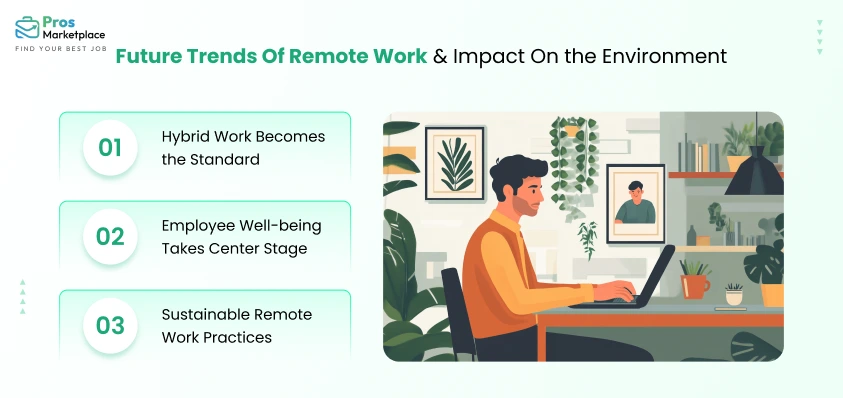
The dramatic spread of remote work amid the pandemic has already, in many cases, transformed how we work. Today, over half the American workforce either works remotely at least some of the time, and” businesses are reimagining work for the future with an emphasis on flexibility, sustainability, and employee wellness. Here are the key remote work trends for 2025 and their environmental implications.
- Hybrid Work Becomes the Standard
The hybrid model of work is already the new normal for institutions the world over. By mixing remote working with in-office collaboration, firms give their employees flexibility to work but also keep spaces for in-person strategic meetings, creativity, and team-building.
It’s also good for the environment, as the hybrid model cuts back on the amount of work from workers coming in every day and driving in, which would decrease the carbon emissions, commuting emissions, energy, and greenhouse gases. Having fewer cars on the road provides businesses with the opportunity to do their part in lifting air quality and decreasing their carbon footprint. Hybrid work enables the world’s workers to support long-term sustainability and co-create better work with face-to-face collaboration, even as work splits between the home and the office.
Key environmental benefit: lower carbon footprint, measurable reductions in emissions, energy savings, and a positive environmental impact.
- Employee Well-being Takes Center Stage
With remote workers struggling to balance home and office responsibilities, mental and physical health, in addition to work-life balance, are at the top of the list for employee priorities. The likes of problems like stress, isolation, and burnout are inspiring companies to invest in:- Balance work-life and personal commitments with flexible scheduling
- Virtual fitness programs and counseling services
- Ergonomic home office setups
- Regular check-ins to strengthen the connection
Employee well-being is good for people and for the planet. Remote working means less demand for large office spaces, which cuts energy use and operational gas emissions related to heating, cooling, and lighting buildings. A more productive workforce combined with more intelligent resource consumption has the potential to ensure that businesses are able to meet productivity aspirations as well as sustainability goals.
Key environmental benefit: Reduced use of centralized office resources = less energy use and greenhouse gas emissions.
- Sustainable Remote Work Practices
The move to environmentally friendly remote-working habits may even be the most impactful trend. By eliminating or reducing daily commutes, a company reduces its unwanted carbon footprint, CO2 levels, and thereby global greenhouse gas emissions. But sustainability doesn’t stop there. Forward-thinking businesses are: -
- Encouraging energy-efficient home office setups
- Transitioning to digital tools for collaborative work
- Enabling subsidies for remote workers on renewable energy
- Starting programs to reduce waste and heighten awareness of climate change and climate action.
These efforts demonstrate that remote work is not simply a convenience but a way to make workplaces greener and more sustainable. Sustainable-minded businesses do more than help the planet — they attract the attention of remote workers who want to work for companies making a positive environmental.
Primary environmental benefit: Less commuting + green offices for the home = measurable headway against climate change.
Conclusion
The movement toward sustainability and remote work is not a temporary adaptation but one of the foundational supports to the future sustainable work environment. Companies including Andela, Dell, Salesforce, and Meta have shown that cutting transportation emissions through hybrid and remote-first models is not only effective in reducing carbon footprints but also reinforces climate targets. By reducing reliance on fossil fuels through fewer commutes, the remote workforce is actively shaping a greener way of working. And as the demand for remote jobs continues to rise, businesses that embed eco-conscious practices into their operations will be better prepared to balance growth with sustainable living. The environmental advantages of remote working clearly demonstrate that rethinking when and where we work can be a transformative force for achieving long-term sustainability in the workplace and beyond.