Nowadays, many companies hire employees from around the globe and allow them to work remotely as unique opportunities for global expansion and enhanced productivity. Moreover, remote work has its benefits for both the employer and the worker. From an organization’s perspective, remote job not only cuts costs and lower employee churn but also improve employee retention and well-being. And besides, today’s generation seeks balanced work-life and personal life, thus the option to work from home is a highly supported benefit.
With all these remote work benefits, companies that foster a remote workforce also face numerous operational challenges and compliance concerns while transitioning from physical workspaces to a virtual model. From the insights in this article, we will learn how global organizations are able to reap benefits from remote employees and discover proven strategies to address the challenges in building an international remote team.
Understanding Remote Work: Benefits & Challenges
As more businesses have started adopting remote working practices after the Covid-19 pandemic, the need to maintain communications across teams and individuals has become crucial. Many organizations are also expanding their talent pools beyond borders, with trends like remote hiring in Latin America gaining traction. In such situations, it is obvious to wonder how to collaborate effectively within a virtual setting. Many companies have provided tools and practices to facilitate work for remote employees.
Global workplace analytics further shows that this change is not temporary but a long-term restructuring of how modern businesses operate. As per a report from Slack, a significant portion of the workforce in the US (44%) and UK (45%) had shifted to work-from-home (WFH) compared to on-site offices by the end of 2020. This isn’t just a trend; it’s a fundamental shift in how creative work gets done, unlocking a new era of innovation and efficiency. And if you’re still on the fence about whether this model can work for your team, you’re in the right place. This guide reveals how to unlock the remote work benefits for creative professionals truly.
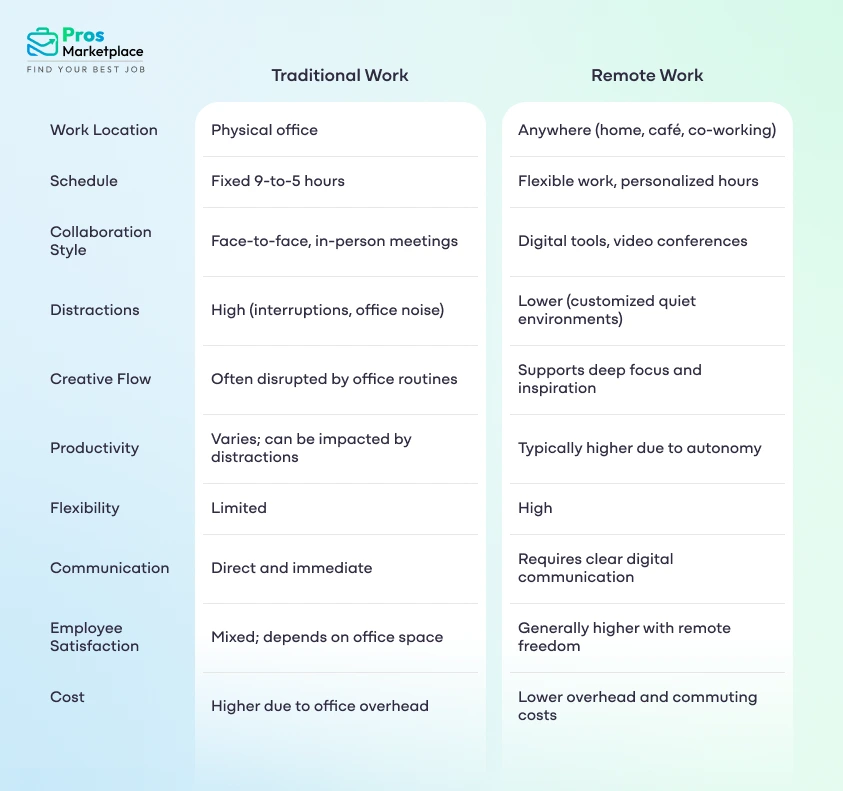
Difference Between Traditional vs. Remote Work
It’s a familiar debate: Can creative teams really thrive—and deliver outstanding results—without gathering in the same physical space? While the traditional office has its merits, remote work is rewriting all the old rules and shaking up long-held assumptions about productivity.
- Traditional Work: Teams gather in a physical office, follow structured hours, and collaborate face-to-face. While offices offer instant interaction and routine, they can also lead to more distractions, rigid schedules, and less flexibility for creative flow.
- Remote Work: Team members work from anywhere, set flexible work hours, and rely on digital tools to collaborate. This setup minimizes office distractions, supports personalized workflows, and has been shown to boost productivity and creativity—especially for creative teams seeking focus and inspiration.
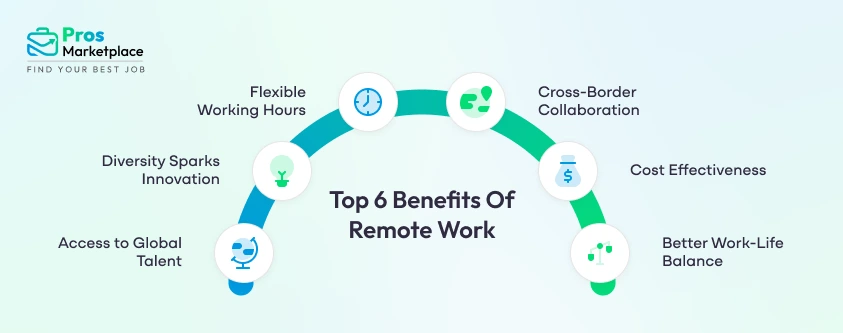
Top 6 Benefits of Remote Work for Creative Teams & Projects
Remote work used to be a rare employment setting, but in recent years, it has evolved into a widespread model adopted by organizations all over the globe. This development has altered our perception of work and, at the same time, has transformed the definition of a satisfying remote job. There are several ways remote work benefits both remote employees and the organization in particular, including:
1. Access To Global Talent — Operate Your Team from Anywhere!
Remote work transforms hiring: you’re no longer limited by geography. Employers and creative teams can handpick top designers, developers, illustrators, and strategists from across Latin America (or the globe), assembling a truly world-class team. This access to diverse talent allows creative leaders to find the perfect combination of skills, backgrounds, and ideas for any project, leading to more dynamic and effective outcomes.
2. Diversity Sparks Innovation
Bringing together professionals from different cultures, languages, and experiences is a recipe for groundbreaking ideas. Remote work enables assembling teams with varied perspectives, which is proven to increase creativity, generate unique solutions, and help brands connect with diverse markets. For creative fields—where thinking outside the box is crucial—this diversity drives richer brainstorming and more compelling advertising, branding, or design.
3. Flexible Work Hours = Happier, More Productive Teams
Creative energy doesn’t run on an office clock. Remote job lets creative professionals choose their most productive hours—whether that’s early morning or late at night—so they can work when inspiration is strongest. This autonomy of flexible work leads to higher job satisfaction, more motivation, and less burnout, resulting in consistently better creative output.
4. Cross-Border Collaboration — Fresh Creativity & Innovation
With remote teams spread over different time zones, work rarely hits a dead end. One team can hand off a project at the end of their day, and another can pick it up—keeping creative projects moving 24/7. This “follow-the-sun” collaboration shortens turnaround times and increases agility, allowing agencies and brands to deliver faster for clients all over the world.
5. Cost Effectiveness Without Compromising Quality
Remote team hiring eliminates expenses related to office space, utilities, and in-office perks. Businesses can reinvest these savings in better tools, training, or even hiring more specialized talent. Leveraging platforms that connect to top Latin American creative professionals often delivers premium skills at competitive rates, helping companies stay budget-friendly without trading down on quality.
6. Better Work-Life Balance — Long-Term Engagement
Remote workforce empowers creatives to balance professional demands with personal needs—family, health, hobbies, or rest. This balance isn’t just a perk; it’s linked to improved employee engagement and loyalty, higher morale, and lower turnover. Creative professionals who feel supported in their work-life balance are more likely to stick with employers and stay passionate about their projects.
By embracing remote work, creative remote teams gain the tools, flexibility, and diversity that fuel next-level collaboration and ingenious results.
Challenges of Remote Work Collaboration: Proven Strategies for Success
Although flexible work has numerous benefits, highlighting the challenges of remote work is arguably as critical as recognizing the positives it offers to both companies and employees. Despite the obvious benefits, the shift to remote work may pose some difficulties, like work-life balance, lack of social contacts, feeling of isolation, distractions, and even lack of effective communication & collaboration are the biggest struggles.
While in a traditional office space, some of these may seem minor, the reality is much different when it comes to remote working. These factors can be so problematic that, at worst, they can undermine the entire organizational structure of the remote workforce model. So we’re here to share the most significant issues that creative teams may face, along with the proven strategies to overcome them:
1. Communication Gaps & Misunderstandings
Remote teams often struggle with miscommunication because the subtle cues we rely on in person—like tone, facial expressions, and immediate feedback—are missing in digital spaces. It’s easy for quick messages to be misconstrued or for important details to fall through the cracks. Over time, this can lead to confusion about project expectations, slower turnaround on creative ideas, and even tension between team members. For creative professionals who thrive on nuanced feedback and clear direction, these gaps can stifle innovation.
Solution:
- Set clear expectations for communication channels (e.g., Slack for quick chats, Zoom for brainstorming, email for formal updates).
- Encourage regular video calls for project kickoffs, feedback sessions, and casual check-ins.
- Use visual collaboration tools (Miro, Figma, Loom) to demonstrate ideas beyond words.
2. Time Zone Barriers
With teams spread across different cities or countries, time zone differences can make synchronizing work a daily challenge. Scheduling meetings, collaborating on design reviews, or brainstorming in real time may require someone to log in early or stay online late. Important decisions can be delayed, and team members sometimes feel left out if they’re not present when discussions happen, making cohesive project momentum harder to maintain.
Solution:
- Establish clear “core hours” when all team members are available for live collaboration.
- Rely on asynchronous tools (shared docs, recorded video updates) so work can progress around the clock.
- Rotate meeting times periodically so no one region is always inconvenienced.
3. Tracking Progress & Accountability
Without the visibility provided by a shared workspace, managers and team members alike can worry that work is slipping through the cracks. It becomes difficult to see who is working on what, if anyone is blocked, or if deadlines are at risk of being missed. This lack of transparency can lead to frustration, duplicated effort, or stress about whether everyone is carrying their weight—a particular concern for fast-moving creative projects where accountability is paramount.
Solution:
- Use transparent project management tools like Asana, Trello, or Monday.com to visualize progress.
- Break down large projects into smaller, trackable tasks with clear ownership.
- Set and share weekly goals, then celebrate individual and team wins, big or small.
4. Creative Momentum & Idea Generation
In-person creative work greatly benefits from spontaneous conversations and collective energy, like—a quick chat over coffee, an impromptu sketch on a whiteboard, or a team brainstorming session. Remote office space can dampen this spark, as time lags, scheduled calls, and digital interfaces make it harder to riff off each other’s ideas in real time. As a result, teams may struggle to keep brainstorming sessions vibrant and generate the breakthrough concepts that often come from physical presence.
Solution:
- Schedule regular, open brainstorming meetings and make “ideation” a recurring agenda item.
- Invest in real-time collaborative software (Mural, Google Jamboard) that replicates whiteboarding online.
- Encourage team members to share inspiration, sketches, or design drafts informally—keeping idea flow alive.
5. Tech Hiccups & Security Concerns
When working remotely, creative teams rely heavily on technology for collaboration and file sharing. However, this dependence can backfire if someone experiences unreliable internet, outdated software, or compatibility issues between tools. Even worse, creative projects often involve sensitive assets and client information, making them attractive targets for cyber threats. Data breaches or tech failures don’t just stall progress—they can also erode client trust and put important work at risk.
Solutions:
- Ensure everyone has access to reliable internet and up-to-date equipment.
- Choose reputable cloud-based design and collaboration platforms with security features enabled.
- Offer regular training on digital hygiene (e.g., using strong passwords, secure sharing practices).
Build Your Own Creative Team: How To Get Started?
Although allowing remote work boosts employee engagement, employee retention, and productivity at the company, an effective plan for managing remote workers must be created in order to eliminate ambiguity, minimize risk, and achieve long-term success. Let us take a look at all the remote teams management facets below and understand how to get started to build your own creative team:
- Define Your Needs: Map out project scopes and the specific skills you’re missing.
- Leverage Remote Hiring Platforms: Like Pros Marketplace, to connect with vetted talent in LATAM (Latin America) who have worked remotely and understand the deadline-driven creative culture.
- Set Clear Goals & Communication: From daily check-in meetings to weekly reviews, transparency drives trust.
- Invest in Creative, Collaborative Tools: Get the right software tools or platforms for effective communication, collaboration, file sharing, ideas & feedback.
- Nurture Your Team: Prioritize recognition, personal growth, and mental well-being.
Essential Tools for Remote Creative Collaboration In 2025
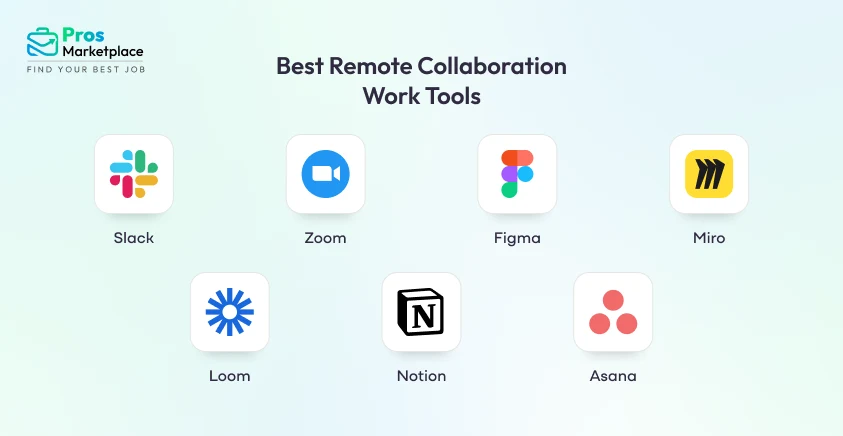
Thriving as a remote creative team is all about staying connected, sparking ideas, and effortlessly sharing progress—regardless of location. The right mix of digital tools transforms distributed teams into collaboration powerhouses, ensuring every voice is heard and every project flows smoothly.
- Slack: Instant messaging, channels for group discussions, and quick file sharing keep everyone connected.
- Zoom: High-quality video meetings and screen sharing for real-time team communication and presentations.
- Figma: Collaborative design platform for live ideation, edits, and feedback on creative projects.
- Miro: Virtual whiteboard supporting team brainstorming, workflow mapping, and creative mind-mapping.
- Loom: Quick video recordings for asynchronous feedback, walkthroughs, and design explanations.
- Notion: Centralized documentation, wikis, and project notes for organizing resources and sharing updates.
- Asana: Task management and workflow tracking to assign responsibilities and monitor progress.
To Sum It Up!
As more and more companies are shifting their work processes to a remote workplace, igniting inspiration and creativity, it’s only a matter of time before traditional offices will vanish quickly as workers are encouraged to follow the “Work-from-Home” setting from anywhere (backed by global workplace analytics).
If you’re looking for a digital platform where you can hire skilled professionals from Latin America for remote work, then Pros Marketplace is the best option for you.