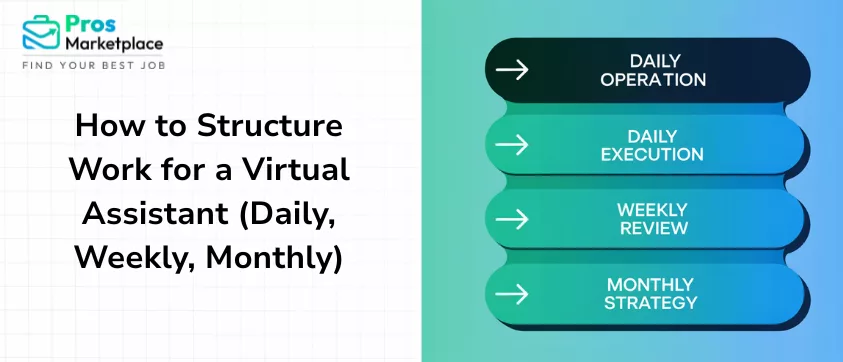
Hiring a virtual assistant can transform how a business operates. Tasks get delegated, time is freed up, and productivity increases. Yet many businesses fail to see these benefits. The issue is rarely the virtual assistant. The problem is a lack of structure.
Without clear systems, even the most skilled virtual assistant will struggle. Tasks become reactive instead of proactive. Communication breaks down. Output becomes inconsistent. Over time, frustration builds on both sides.
The difference between a virtual assistant who feels like an expense and one who becomes a growth driver comes down to how work is structured.
This guide outlines how to organize virtual assistant responsibilities across daily, weekly, and monthly workflows. With the right structure in place, a virtual assistant can become one of the most valuable assets in a business.

The Foundation Before Assigning Tasks
Before assigning daily tasks or building workflows, there needs to be clarity around expectations. Skipping this step often leads to confusion and wasted time.
Start by defining outcomes, not just tasks. A virtual assistant should understand what success looks like. For example, instead of assigning “manage inbox,” define the goal as “maintain inbox at zero and prioritize urgent responses within four hours.”
Next, group responsibilities into categories. Most virtual assistant work falls into areas such as administrative support, marketing execution, operations, or customer service. Clear categories make it easier to assign and track work.
Communication expectations also need to be defined early. This includes which tools to use, how quickly responses are expected, and when to escalate issues. Without this clarity, small delays can quickly compound.
Documentation plays a critical role. Standard operating procedures, templates, and examples reduce guesswork. Even simple checklists can significantly improve consistency.
A strong foundation removes ambiguity and creates a system that supports long-term success.
Daily Structure: Driving Execution and Consistency
Daily structure is where most of the value from a virtual assistant is realized. This is where tasks get completed, systems are maintained, and momentum is built.
What Daily Work Should Include
Daily responsibilities should focus on execution. These are the repeatable tasks that keep the business running smoothly.
Examples include inbox management, calendar coordination, CRM updates, content scheduling, and social media posting. Depending on the role, this may also include customer support responses or data entry.
Each day should begin with a clear list of priorities. Without defined priorities, time gets spent on low-impact tasks while important work is delayed.
Short check-ins can also be helpful. These do not need to be time-consuming meetings. A quick asynchronous update outlining completed tasks, blockers, and next steps is often enough.
Best Practices for Managing Daily Work
Task management tools are essential. Platforms such as ClickUp, Asana, and Trello help organize tasks, set deadlines, and track progress.
Limiting daily priorities to three to five key tasks ensures focus. Overloading a virtual assistant with too many tasks reduces quality and increases the likelihood of delays.
Repeatable checklists also improve consistency. If a task is performed regularly, it should be documented. This reduces errors and speeds up execution.
Daily structure creates rhythm. It ensures that work gets done consistently without requiring constant oversight.

Weekly Structure: Alignment and Improvement
While daily work focuses on execution, weekly structure ensures alignment. This is the time to step back, review progress, and make adjustments.
What Weekly Work Should Include
Weekly planning is essential. At the start of each week, priorities should be reviewed and tasks assigned. This creates clarity and prevents last-minute scrambling.
Reporting should also be part of the weekly workflow. A virtual assistant can provide updates on completed tasks, key metrics, and any challenges encountered. This keeps leadership informed without requiring constant check-ins.
Feedback loops are equally important. Weekly reviews create space to discuss what is working and what needs improvement. Small adjustments made consistently lead to significant long-term gains.
Updating processes should also happen on a weekly basis. If a task becomes repetitive, it should be documented. If a process is inefficient, it should be refined.
Weekly Touchpoints
A 30 to 60 minute meeting is often enough to cover weekly alignment. This time can be used to review priorities, discuss performance, and address any blockers.
During this meeting, it is helpful to revisit key deliverables and ensure that work remains aligned with business goals.
Weekly structure creates accountability and ensures that the virtual assistant is not just completing tasks but contributing to meaningful outcomes.
Monthly Structure: Strategy and Growth
Monthly structure shifts the focus from execution to impact. This is where performance is evaluated and future direction is set.
What Monthly Work Should Include
A monthly performance review provides a clear picture of what has been accomplished. This includes both quantitative metrics and qualitative feedback.
Metrics will vary depending on the role. For marketing support, this might include content output or engagement metrics. For administrative roles, it could include response times or task completion rates.
Strategic adjustments should also be made monthly. As business priorities change, the virtual assistant’s workload should evolve accordingly.
Capacity planning is another key component. Reviewing workload helps determine whether the virtual assistant can take on additional responsibilities or whether support needs to be expanded.
Process refinement is equally important. Identifying bottlenecks and inefficiencies ensures that systems continue to improve over time.
Monthly Review Framework
A simple framework keeps monthly reviews focused and actionable.
Review what was accomplished during the month. Identify which tasks or projects had the greatest impact. Determine what should change moving forward.
This structure ensures that the virtual assistant is contributing to long-term growth rather than just completing tasks.
Common Mistakes to Avoid
Even with the best intentions, certain mistakes can limit the effectiveness of a virtual assistant.
One common mistake is treating a virtual assistant as a task-taker rather than a team member. Without context, tasks lose meaning and quality suffers.
Another mistake is assigning work without clear outcomes. Vague instructions lead to inconsistent results and unnecessary revisions.
Lack of documentation is another frequent issue. Without clear processes, tasks take longer and errors become more common.
Overloading daily tasks is also a problem. Too many priorities reduce focus and lead to burnout.
Finally, skipping weekly and monthly reviews prevents improvement. Without regular feedback, small issues become larger problems.
Avoiding these mistakes creates a more productive and sustainable working relationship.

Example Workflow: Putting It All Together
Combining daily, weekly, and monthly structures creates a system that is both predictable and scalable.
At the start of the week, priorities are defined and tasks are assigned. This sets the direction for the days ahead.
Each day focuses on execution. Tasks are completed, updates are shared, and any blockers are addressed quickly.
At the end of the week, progress is reviewed. Wins are identified, challenges are discussed, and adjustments are made.
At the end of the month, performance is evaluated at a higher level. Strategic changes are implemented, and future priorities are set.
This layered approach ensures that work remains organized, aligned, and continuously improving.
Tools That Make Structuring Work Easier
The right tools simplify collaboration and reduce manual effort.
Task management platforms such as ClickUp, Asana, and Trello help organize workflows and track progress.
Communication tools like Slack and email keep conversations centralized and accessible.
Documentation platforms such as Notion and Google Docs make it easy to store processes, templates, and guides.
Reporting can be managed through simple dashboards or spreadsheets, ensuring that performance is always visible.
Using the right tools reduces friction and allows both sides to focus on meaningful work.
Conclusion
A virtual assistant can either feel like an added expense or become a powerful driver of growth. The difference lies in structure.
Daily workflows create consistency. Weekly systems ensure alignment. Monthly reviews drive improvement and strategic impact.
Without these layers, even the most capable virtual assistant will struggle to deliver results. With them, productivity increases, communication improves, and outcomes become more predictable.
For businesses looking to maximize the value of a virtual assistant, the focus should not be on assigning more tasks. The focus should be on building better systems.
Pros Marketplace connects businesses with pre-vetted virtual assistants who are ready to integrate into structured workflows and deliver meaningful results.
The right structure turns support into leverage.