One of the most common questions that comes up after an employer decides to hire from Latin America is which country to hire from.
It is a good question and it does not have a single answer. The right country depends on the role, the seniority level, the communication requirements, and in some cases the specific industry the business operates in. Mexico, Colombia, and Argentina are the three markets where Pros Marketplace places the most talent, and each one has genuine strengths that make it the right choice for some roles and a less obvious choice for others.
This post breaks it down by country and by role so you can make the decision with actual information rather than a general impression of Latin America as a single undifferentiated talent market.
Why These Three Countries
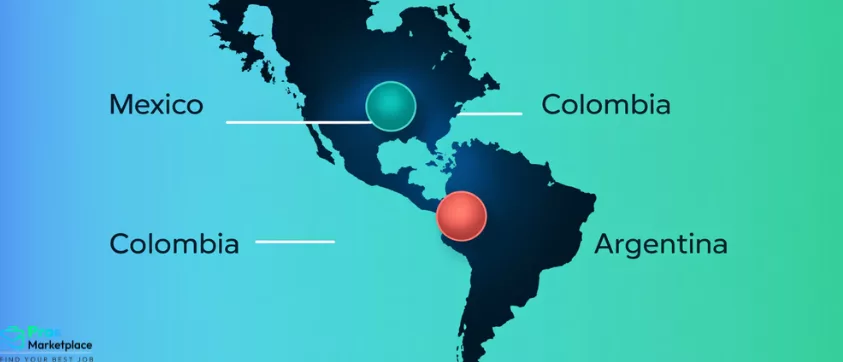
Latin America has more than 20 countries. The reason Mexico, Colombia, and Argentina dominate the conversation for US remote hiring is not arbitrary.
All three have large professional populations with meaningful exposure to US business culture. All three have major metro areas that produce university-educated professionals with business-level English across a range of functions. All three operate in time zones that overlap with US business hours without requiring either side to adjust their schedule. And all three have been producing remote talent for US companies long enough that the ecosystem around it, payment infrastructure, contractor norms, and professional expectations, is mature.
That does not mean the three are interchangeable. They are not, and treating them that way leads to mismatched hires.

Mexico: The Closest Fit for US-Facing Roles
Mexico’s proximity to the United States is not just geographical. It produces a professional culture that is closer to US norms than any other LATAM market in terms of communication style, business pace, and client-facing expectations.
Mexico City operates on Central Time, which gives US employers the tightest time zone alignment of the three markets. Northern border states often operate on Mountain Time. For roles where real-time availability during the full US business day matters, Mexico is frequently the strongest match.
English proficiency at the professional level is high across Mexico City, Monterrey, and Guadalajara in particular. Candidates in these cities have often spent years working with US clients and have developed both the language fluency and the communication instincts that US employers respond to immediately.
Where Mexico is strongest:
Customer-facing roles are where Mexico’s cultural proximity to the US pays off most clearly. Customer support, client success, and sales roles benefit from a combination of strong English, US cultural familiarity, and time zone alignment that makes the working relationship feel immediate. A sales representative in Mexico City calling US-based prospects during US business hours is not navigating a cultural gap in the conversation. They are having the conversation the way a US-based rep would.
Executive assistant and virtual assistant roles where the VA will be interfacing directly with the employer’s clients, partners, or stakeholders also tend to perform best with Mexico-based hires at the higher end of the English and professionalism spectrum. The rate for this level of candidate in Mexico is typically at the upper end of the LATAM VA range, $1,600 to $2,200 per month, which reflects the premium for the market’s depth of US-facing experience.
Where Mexico is more expensive:
Mexico tends to sit at the higher end of LATAM salary ranges across most functions. High demand from US companies, strong English proficiency, and cultural alignment all drive a premium. For roles where the highest priority is cost savings and the work is less client-facing, Colombia or Argentina often provide comparable quality at a lower rate.
Colombia: The Balanced Market for Operational Roles
Colombia has emerged over the past several years as one of the most consistent markets for remote hiring across operational, administrative, and support functions. Bogota and Medellin in particular have developed strong professional ecosystems with large pools of experienced remote workers who have built their careers working with US employers.
Colombia operates on Eastern Time year-round with no daylight saving adjustment. For US employers on the East Coast, a Colombia-based hire is in exactly the same time zone. For teams that run on async communication with periodic live calls, this alignment produces a working rhythm that requires no coordination overhead.
English proficiency in Colombia is high within the professional population that targets US remote work, and it has improved significantly over the past five years as the remote work infrastructure in Bogota and Medellin has matured. The vetting on Pros Marketplace is particularly important in the Colombian market because the range of English proficiency across the broader population is wide. Within the vetted candidate pool, the standard is consistently strong.
Where Colombia is strongest:
Operational and administrative roles represent Colombia’s deepest strength. Virtual assistants, bookkeepers, data entry specialists, project coordinators, and administrative support hires from Colombia consistently perform at a high level across placements on Pros Marketplace. The work ethic, organizational skills, and attention to process detail that characterize strong operational hires are well represented in the Colombian talent pool.
Bookkeeping and finance support roles specifically tend to produce strong results from Colombia. Familiarity with QuickBooks, Xero, and US GAAP reporting is common among experienced Colombian finance professionals, and the attention to accuracy and documentation that bookkeeping requires aligns well with the professional culture of the market.
Rate ranges for Colombia-based hires typically fall in the middle of the LATAM range: $1,000 to $2,000 per month for VA and administrative roles, $1,200 to $2,500 per month for bookkeeping, and $1,800 to $3,200 per month for project management. This combination of quality and rate makes Colombia the most commonly recommended starting point for first-time LATAM employers at Pros Marketplace.
Where Colombia requires more attention:
For highly specialized technical roles or senior leadership positions, the Colombia talent pool is strong but shallower than Mexico or Argentina. Employers hiring for niche technical functions or senior-level strategic roles may need to extend the search or consider Argentina as an alternative.

Argentina: The Deep End of the Talent Pool
Argentina has one of the strongest higher-education systems in Latin America and produces a professional talent pool that skews toward senior, technical, and creative roles at a higher rate than most other LATAM markets. Buenos Aires in particular has a long history of professional services, finance, and technology industries that produce candidates with international exposure and sophisticated work experience.
Argentina operates one to two hours ahead of the US East Coast depending on the season, with no daylight saving adjustment. The overlap window with US business hours is substantial, and for roles where the work is largely deliverable-based rather than requiring live collaboration throughout the day, the slight time difference is not a practical issue.
English proficiency in Argentina is strong at the senior and technical level. At the mid-level, it varies more than in Colombia or Mexico, which makes the vetting stage particularly important for Argentine candidates in roles where English is a primary communication requirement.
Where Argentina is strongest:
Creative and technical roles represent Argentina’s clearest advantage. Web designers, video editors, graphic designers, developers, and content creators from Argentina consistently produce portfolio-level work that competes with what you would expect from a US-based hire at two to three times the cost. The creative culture in Buenos Aires is sophisticated and internationally oriented, and candidates who have built careers in creative industries there have often worked with European and US clients across a range of industries.
Finance and accounting roles at a senior level are another area where Argentina produces consistently strong candidates. The country’s complex economic history has produced a generation of financial professionals who are adept at working across currencies, managing financial complexity, and applying rigorous analytical standards. For US businesses that need a senior bookkeeper, a financial analyst, or a controller-level hire, Argentina is worth exploring specifically.
Project managers at the senior level with cross-functional experience in technology or operations also tend to come from Argentina with stronger strategic framing than comparable candidates from other markets. The rate for senior LATAM project managers from Argentina typically runs $3,000 to $4,500 per month, which is higher than Colombia but still well below the US equivalent.
Where Argentina requires more attention:
Currency dynamics in Argentina have historically created retention considerations over longer engagements. A hire who agrees to a rate in USD is generally well-protected from local inflation effects, but it is worth building rate review conversations into the working relationship at the 12-month mark as a standard practice. Additionally, for roles where budget is the primary constraint, Mexico or Colombia often provide comparable talent at a lower rate.
Side-by-Side by Role
Here is how the three markets stack up across the roles Pros Marketplace places most frequently.
Virtual assistant and executive support: Colombia for cost-effective operational support. Mexico for client-facing or high-communication roles. Argentina for senior EA roles requiring strategic support.
Bookkeeping and finance: Colombia for mid-level with QuickBooks or Xero experience. Argentina for senior-level or more complex financial functions.
Project management: Colombia for operational and coordination-focused PM roles. Argentina for senior or technically complex project management.
Customer support and sales: Mexico as the first choice for client-facing roles requiring strong US cultural alignment and real-time availability.
Creative roles (design, video, content): Argentina as the first choice for portfolio-driven creative work. Colombia as a strong alternative for content and social media support.
Data entry and administrative support: Colombia as the consistent first choice for volume-based, process-driven roles.
For a full picture of what these roles cost across all three markets, the LATAM vs. local hiring cost breakdown covers salary ranges from active 2026 placements alongside US equivalent costs.
How to Decide
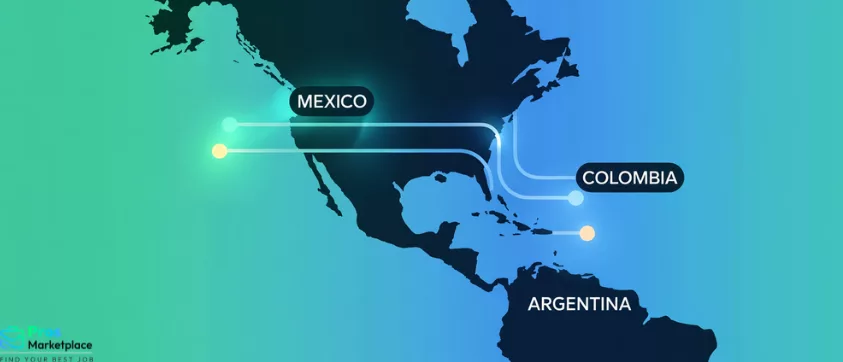
The decision framework is simpler than it looks once you know what each market is best at.
Start with the role requirements. If the role is client-facing or requires strong US cultural alignment, Mexico is the first market to explore. If the role is operational, process-driven, or deliverable-based, Colombia is typically the strongest and most cost-effective match. If the role requires senior-level judgment, creative depth, or technical sophistication, Argentina is worth the additional search time and slightly higher rate.
From there, let the vetting process do its job. The country gives you the market to search in. The individual candidate’s English proficiency, work culture familiarity, and demonstrated experience determine whether you have found the right person regardless of where they are based.
For a detailed guide on what to evaluate during the vetting process across any LATAM market, what to look for in a LATAM remote worker covers the full criteria.
Once you have made the hire, what to expect in your first 90 days working with a remote LATAM employee gives you the month-by-month framework for getting the working relationship built correctly regardless of which country your hire is in.
Browse pre-vetted remote workers from Mexico, Colombia, and Argentina on Pros Marketplace across every role. Or post your position today and let the right candidate come to you.
Frequently Asked Questions
Is Mexico, Colombia, or Argentina the best country to hire remote workers from? It depends on the role. Mexico is the strongest market for client-facing and US-cultural-alignment-sensitive roles. Colombia is the most consistent market for operational, administrative, and bookkeeping functions. Argentina is the strongest for creative, technical, and senior-level roles. Most employers who build a multi-person LATAM team end up with hires from more than one country because the right market varies by function.
Which LATAM country has the best English proficiency for remote work? Mexico and Colombia are the most consistent for business-level English across mid-level professional roles. Mexico’s proximity to the US and long history of cross-border professional services drives a high baseline. Colombia’s major metros, particularly Bogota and Medellin, have developed strong English proficiency specifically within the professional population targeting US remote work. Argentina is strong at the senior level but has more variation at the mid-level than the other two markets.
Are LATAM remote workers in Mexico, Colombia, and Argentina in the same time zone as US teams? Close enough for most working relationships. Mexico City is on Central Time. Colombia is on Eastern Time year-round with no daylight saving adjustment. Argentina is one to two hours ahead of the East Coast. All three markets allow for full overlap with US business hours without either side working outside their normal schedule.
Which country offers the lowest rates for LATAM remote workers? Colombia typically offers the best combination of rate and quality for mid-level operational roles. Argentina’s rates are competitive at the senior level but tend to be higher than Colombia for comparable mid-level functions. Mexico tends to sit at the higher end of the LATAM range because of the premium the market commands for US-facing experience and cultural alignment. For the full breakdown of rates by role and country, the LATAM worker cost guide for 2026 covers the complete picture.
Can I hire from multiple LATAM countries for the same team? Yes, and many of the most effective remote teams at Pros Marketplace do exactly this. A VA from Colombia, a designer from Argentina, and a sales representative from Mexico on the same team is a common configuration. The time zone differences across the three markets are small enough that coordination is not an issue, and the role-specific strengths of each market mean you are hiring from the deepest available pool for each function rather than constraining every hire to a single market.
How do I know if a candidate from Argentina, Colombia, or Mexico is the right fit before I hire? The same way you evaluate any remote candidate: a structured interview with specific questions that require real experience to answer, a written evaluation of their English at the application stage, and a paid trial task before you commit. The country tells you which market to search in. The vetting process tells you whether the individual candidate is the right hire. What to look for in a LATAM remote worker covers the evaluation framework in full.